What If My Child Doesn’t Practice?
It’s one of the most common concerns parents have:
“What if my child doesn’t practice?”
At Canton Music Academy, we see this all the time — especially in the beginning stages of lessons.
The truth? It’s normal.
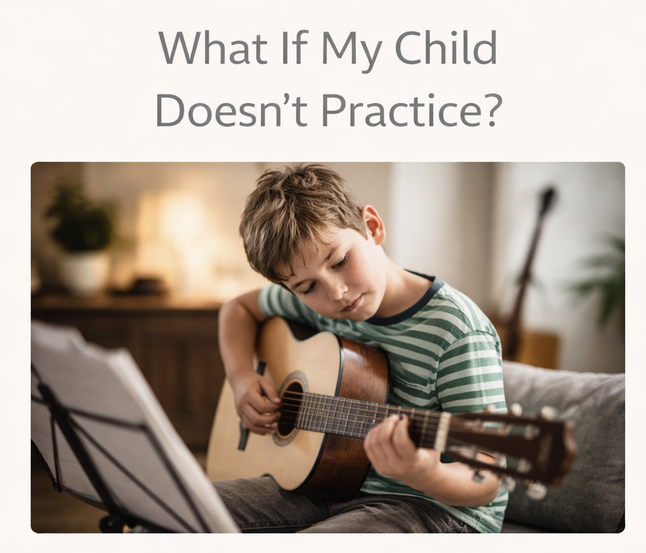
Is It Common for Kids Not to Practice?
Very.
It’s actually rare for a child to start lessons and immediately practice 2–3 hours a day on their own.
Most students are attracted to the idea of playing at a high level. The reality of practicing scales or repeating small sections over and over doesn’t feel glamorous at first.
It takes time for students to understand that the basics are what make them better.
This is a normal phase.
Enroll NowWhy Kids Don’t Practice
There isn’t just one reason.
Sometimes it’s:
- No clear routine yet
- Too many other activities competing for attention
- Not fully understanding what to practice
- Parent-child tension around expectations
- Boredom with material they don’t feel good at yet
We tend to enjoy things we’re already good at. Early practice can feel slow and repetitive, and that’s where patience matters.
What We Do When Practice Slows Down
When a student isn’t practicing consistently, we don’t immediately panic.
Depending on the situation, we might:
- Adjust expectations
- Change the material
- Shake things up creatively
- Have a private conversation with parents
- Occasionally recommend adding a second weekly lesson for structure
The goal is not to make the student feel like we’re “against them.” That can quickly turn lessons into a negative experience.
Instead, we try to keep the student feeling supported.
Does Forcing Practice Work?
No.
In reality, you can’t truly force someone to care about improvement.
Practice built on fear or pressure rarely leads to long-term growth.
What works better is:
- Encouragement
- Short daily sessions
- Clear expectations
- Positive reinforcement
- Giving students time to mature
Is It Okay to Take a Break?
Yes.
Sometimes life happens. Sometimes there’s serious defiance. Sometimes a child simply isn’t emotionally ready.
It’s okay to pause and revisit lessons later.
How long that break should be depends on the family and long-term goals.
Music doesn’t disappear just because you step away for a season.
“I’m Wasting My Money.”
Parents sometimes say this out of frustration.
But early practice struggles don’t mean lessons aren’t working.
Often, students are:
- Learning more than they realize
- Building understanding mentally before it shows physically
- Developing discipline slowly
Music is a real skill. It doesn’t develop instantly.
The key question isn’t “Are they perfect?”
It’s “Are they gradually improving over time?”
What Helps Most
The most effective strategies tend to be:
- Short daily practice instead of long, forced sessions
- Keeping the atmosphere positive
- Offering recitals as motivation
- Giving students a chance to perform what they’ve learned
Recitals especially can shift motivation dramatically. When students prepare to perform, practice suddenly has purpose.
The Bigger Picture
Almost every student goes through a phase where practice feels inconsistent.
What separates long-term musicians from short-term quitters isn’t talent — it’s staying the course long enough for improvement to become obvious.
Patience matters.
Encouragement matters.
And most importantly, keeping the experience positive matters.
If you ever have concerns about practice, we’re happy to talk. Adjustments can always be made.
Music is a long-term skill — and growth rarely happens in a straight line.
— Canton Music Academy
Private Music Lessons in Canton, Michigan
Piano • Guitar • Voice • Drums • Violin
Learn more about our programs, resources, and lesson options below.
Related Reading
Popular Private Lesson Programs in Canton
- Piano Lessons in Canton
- Guitar Lessons in Canton
- Voice Lessons in Canton
- Drum Lessons in Canton
- Violin Lessons in Canton
Our Sister Music Academies