How Often Should Kids Practice?
One of the most common questions parents ask when starting lessons is how often should kids practice? It’s an important question, but the answer isn’t about forcing long sessions or hitting a perfect daily number. It’s about building a routine that supports confidence and steady progress over time.
A little bit, as often as possible. For most kids, short sessions on most days of the week work far better than one long session before the next lesson.
- Consistency matters more than total time
- Early routines build confidence and momentum
- Practice should grow with the student
Build a Practice Routine for Your Child
Every child is different, so treat these as starting points rather than rules. Pick your child’s age and how long they’ve been taking lessons, and use the weekly tracker to celebrate each day they play.
Loading the practice planner…
Short, Regular Practice Beats Long Sessions Here and There
For most children, especially beginners, short and regular practice sessions are far more effective than long sessions done occasionally. Practicing a little bit as often as possible helps reinforce:
- Muscle memory
- Coordination
- Comfort with the instrument
Long practice sessions can be useful later for students who want to advance more deeply, but when building skills from the ground up, consistency always wins.
Let Young Students Build Confidence First
For very young students, practice doesn’t always look the way parents expect. Often, concepts sink in mentally before they show up physically. That’s normal. Confidence plays a huge role early on, and too much pressure can slow that process down. Instead of correcting or directing every practice session, we often suggest:
- Asking your child to show you something they learned
- Sitting in on a lesson if you don’t already
- Letting routines form naturally over time
When parents show interest without pressure, kids are more likely to engage.
As students become more confident, many parents wonder whether it’s time to add a second instrument. We cover the benefits and the best combinations in Can My Child Learn More Than One Instrument?
Parent Involvement Matters: It’s a Partnership
The more involvement from parents, the better, especially early on. Music progress works best as a partnership. Some families aim for full independence, and if a child naturally takes that on, that’s great. But early involvement often leads to:
- Better consistency
- Stronger motivation
- A little healthy competition when parents try things themselves
When kids see parents engaging, even casually, it often sparks more effort and enthusiasm.
Practice Environment Makes a Big Difference
Different instruments come with different challenges.
Guitar, violin and wind instruments tend to fall out of the routine when they live in a case. Set up a dedicated practice space with a chair, a music stand, and books and materials always ready, so practice feels automatic.
Since it stays in one place, it’s easier to return to, but it’s often in a shared space. Some students feel self-conscious playing in front of the family. Finding a comfortable time and environment can make a big difference.
Use Resources to Keep Practice Engaging
Practice doesn’t have to feel repetitive or boring. Helpful resources include:
- Posters or visual reminders
- Apps and interactive tools
- New books or games
- Pictures or charts that track progress, like the weekly tracker above
Anything that stimulates curiosity and keeps the mind engaged can help students connect more deeply with their instrument.
So, How Often Should Kids Practice?
In most cases, a little bit as often as possible is best. Consistency matters more than total time, and early routines build confidence and momentum. If practice feels manageable and encouraging, students are far more likely to stick with it long-term.
If you’re unsure what’s realistic for your child, we’re happy to help you find a plan that fits your schedule and goals. Practice routines can always evolve as students grow.
Practice FAQ
How many minutes a day should a beginner practice?
For young beginners, 5 to 10 focused minutes is a great start. What matters most is doing it on most days. Your child’s teacher will suggest when to add more time.
Do two short sessions count as practice?
Absolutely. Five minutes before school and five after dinner is often better than ten minutes in one sitting, especially for younger kids.
Should I make my child practice?
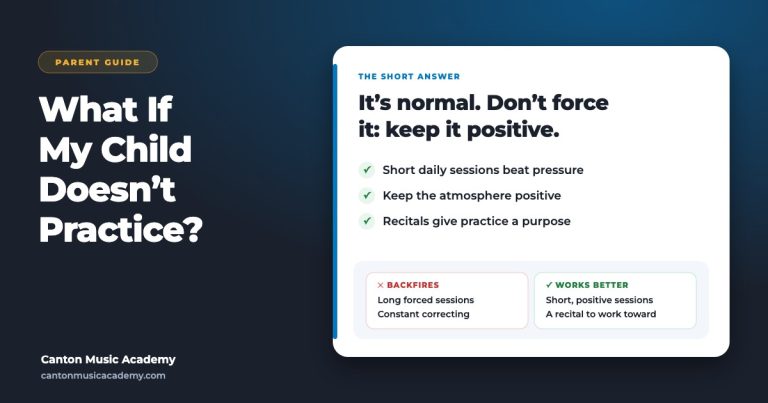
Gentle structure helps, like a regular time of day and a ready-to-go practice space. Forcing long sessions usually backfires. Read more in What If My Child Doesn’t Practice?
What if we miss a few days?
It happens to everyone. Just pick the routine back up. One missed day doesn’t undo progress, but a missed habit can, so focus on getting back on track.
The Parent Guide to Music Lessons
Straight answers to the questions parents ask us most.
Getting started
Practice & progress
Questions About Your Child’s Lessons?
Every student is different. Call, text or stop by and we’ll help you find what works for your child and your schedule.
Also from our family of schools: Grosse Pointe Music Academy and Brighton Music Academy.