Guitar Music Theory Guide
Understanding music theory helps you play with more confidence, recognize patterns and make faster progress. This guide brings all of our free, interactive theory tools into one place, so you can see it, hear it and play it instead of just reading about it.
- 12 interactive tools
- Guitar, piano & ukulele
- Free, no sign-up
- Printable PDFs
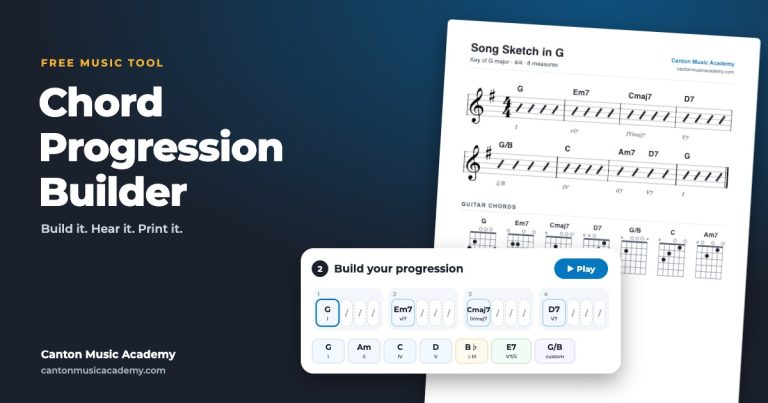 Chord Progression BuilderBuild a progression in any key, hear it, and print a chart with chord diagrams for guitar, ukulele or piano.Open the builder →
Chords & Harmony
Chords are the building blocks of most music. Understanding how they’re built and how they relate to each other makes it easier to learn songs and write your own.
All levelsChord Progression BuilderBuild progressions in any key with diatonic, borrowed and secondary dominant chords, then print a chart.Build · hear · print PDF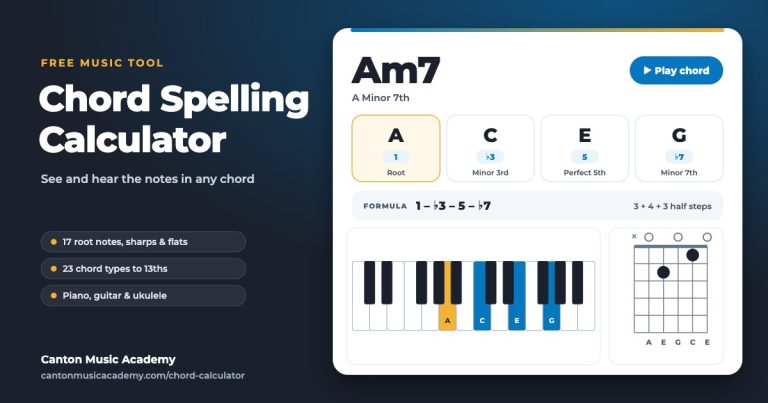 BeginnerChord CalculatorSpell any chord and see it on piano, guitar and ukulele, with every inversion.Any chord, 3 instruments
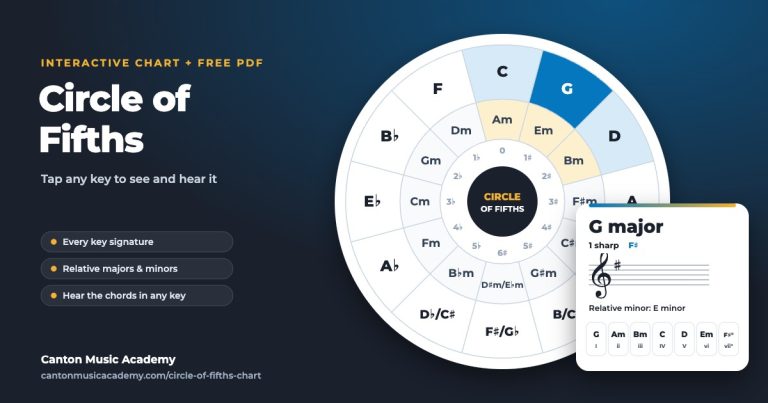 BeginnerCircle of FifthsTap any key to see its key signature, relative minor and chords, and hear them.Interactive chart + PDF
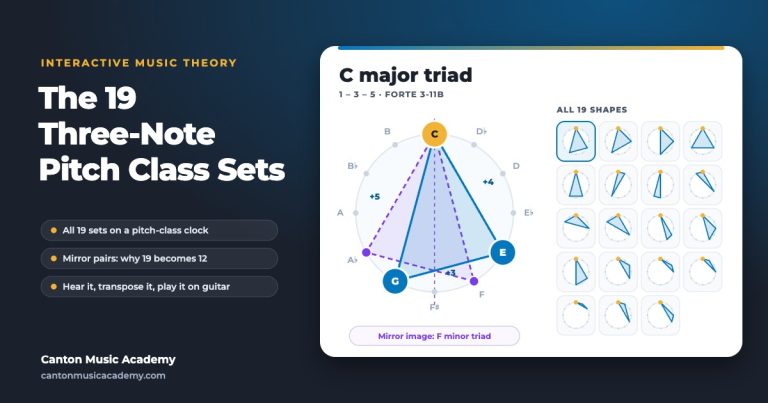 AdvancedThree-Note Pitch ClassesAll 19 three-note shapes on a pitch-class clock, with their mirror images.Hear · transpose · play
Scales & Modes
Scales are the foundation of melody and improvisation. Learn how they’re built and how they function, so you understand what you’re playing instead of just memorizing shapes.
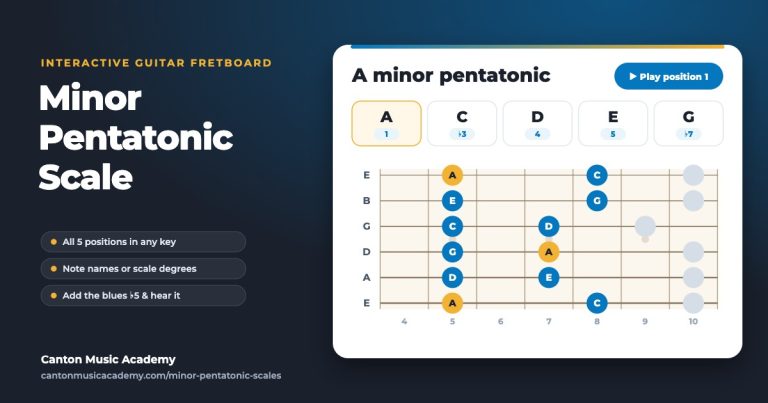 BeginnerMinor Pentatonic ScaleAll 5 positions in any key on an interactive fretboard, plus the blue note.5 positions, any key
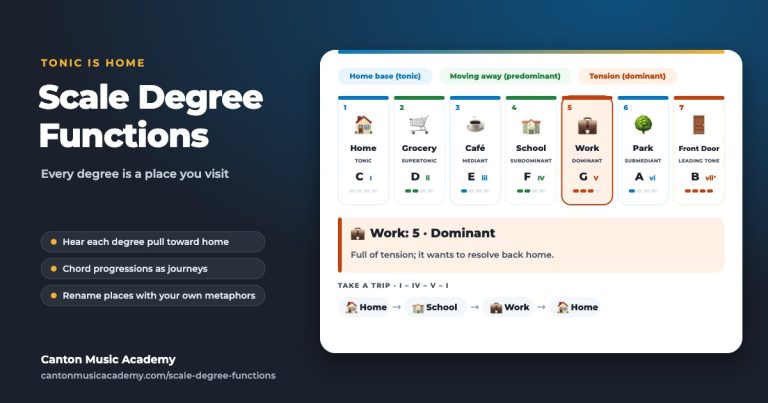 BeginnerScale Degree FunctionsTonic is home, the dominant is work: hear all 7 scale degrees as places on a map.Hear degrees in any key
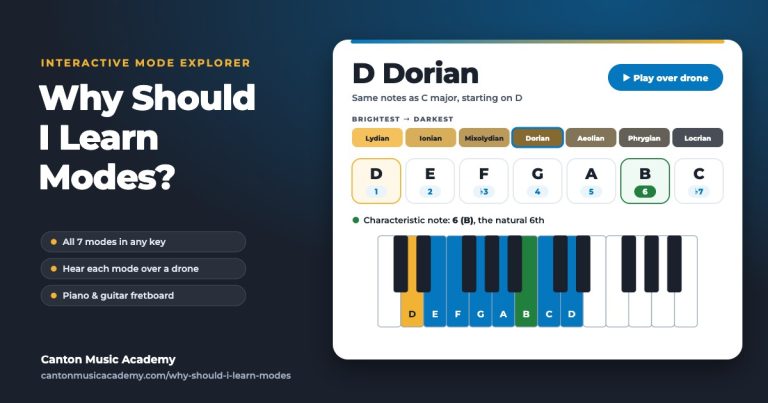 IntermediateThe 7 ModesHear every mode from bright Lydian to dark Locrian and see its characteristic note.Hear all 7 modes
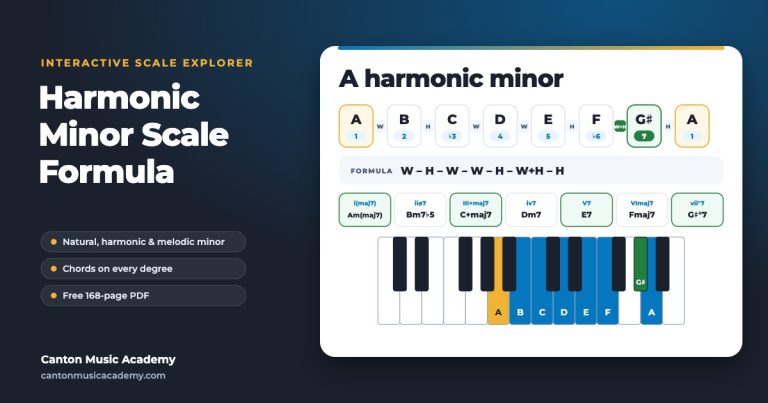 IntermediateHarmonic Minor ScaleCompare natural, harmonic and melodic minor in any key and hear their chords.Formula + 168-page PDF
Guitar Tunings
Alternate tunings change how chords and scales lie on the neck. Each one opens up new sounds and makes certain techniques easier.
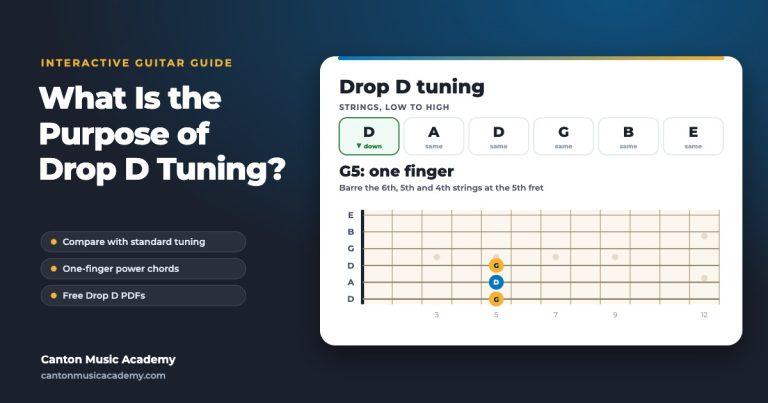 BeginnerDrop D TuningCompare Drop D with standard tuning and try one-finger power chords.Fretboard + PDFs
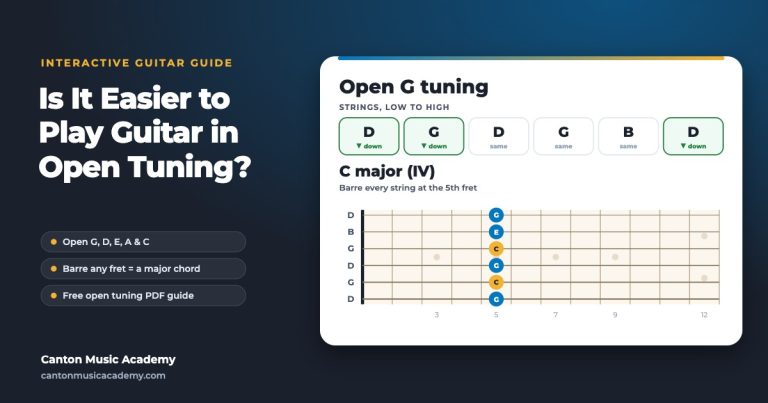 IntermediateOpen TuningsHear open G, D, E, A and C, and see why barring any fret makes a chord.5 open tunings
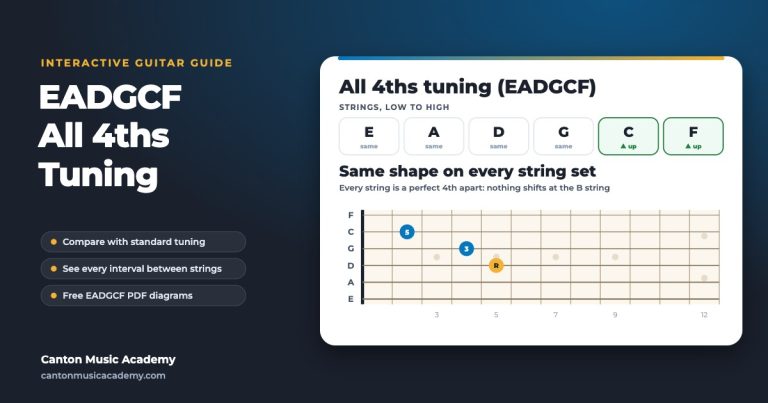 AdvancedAll 4ths Tuning (EADGCF)Every string a perfect 4th apart, so shapes never change. Compare with standard.Fretboard + PDF
Practice & Play Along
Theory sticks when you use it. Put scales and chords to work over a backing track, and keep practice consistent.
 All levelsG7 Blues Backing TrackA 12-bar swing blues in G at 94 BPM, with the chord chart and the best scales to solo with.Play along
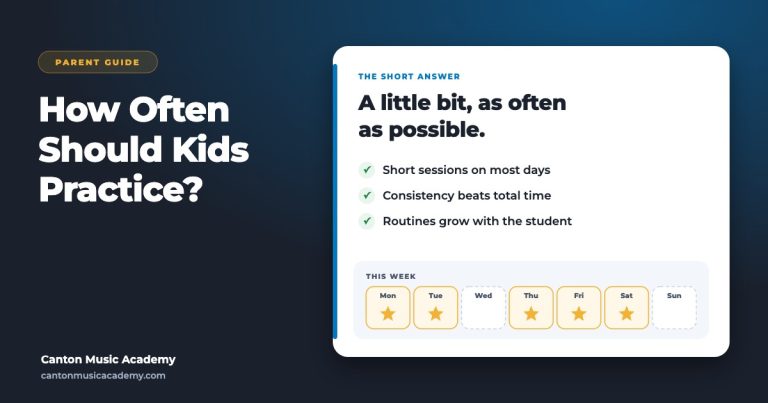 All levelsPractice PlannerA realistic practice routine by age, with a weekly star tracker you can print.Plan · track · print ▶VideoGuitar Union on YouTubePrefer video? Watch lessons and theory breakdowns on our Guitar Union channel.Watch lessons
A Step-by-Step Learning Path
Work through the tools in this order. Each step builds on the one before it, from your first scale degrees to advanced harmony.
- 1Scale Degree FunctionsLearn the 7 scale degrees and how each one feelsBeginner
- 2Chord CalculatorSee how chords are built from those degreesBeginner
- 3Minor Pentatonic ScaleLearn your first scale shapes on the fretboardBeginner
- 4Circle of FifthsConnect keys, key signatures and chordsBeginner
- 5Chord Progression BuilderPut chords together into your own progressionsAll levels
- 6The 7 ModesHear how each mode changes the moodIntermediate
- 7Harmonic Minor ScaleAdd the sound of harmonic and melodic minorIntermediate
- 8Three-Note Pitch ClassesSee every three-note shape in musicAdvanced
Why Theory Matters (Even If You Learned by Ear)
I didn’t learn music the “right” way. I learned guitar mostly by listening, jamming and figuring things out by ear, and I was skeptical of anything that smelled academic. Eventually I came around, and that knowledge became essential.
In the guitar world there can be a strange pride in not knowing. But theory isn’t the enemy. It’s a tool, not a prison. Learning the notes in a major scale or what makes a chord function won’t kill your creativity; it gives it direction. Years later, former students who rolled their eyes at the Mixolydian mode often tell me, “I should have paid attention to that stuff.”
The best players learn both ways: instinct and insight. You can feel music and understand it.
“You don’t have to lose your edge to get smart.”Henry Bahrou, Guitarist, Music Theorist & Director, Canton Music Academy
More Free Guides & Tools
Helpful tools for beginners and parents, from choosing an instrument to building a practice routine. See the full Parent Guide series too.
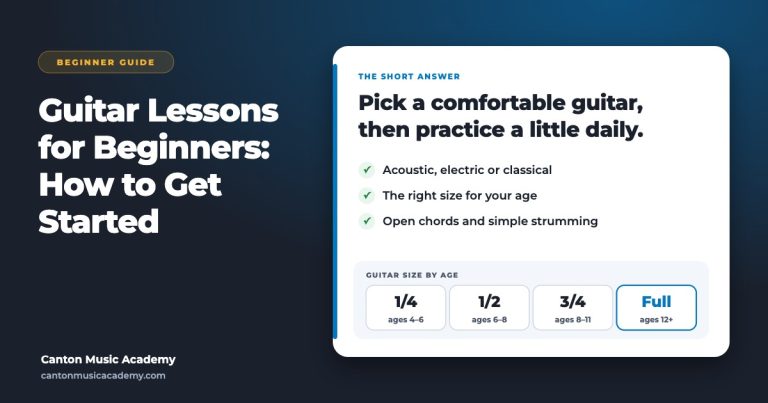 Beginner Guitar GuideChoosing a guitar, sizes by age, and what to practice first.
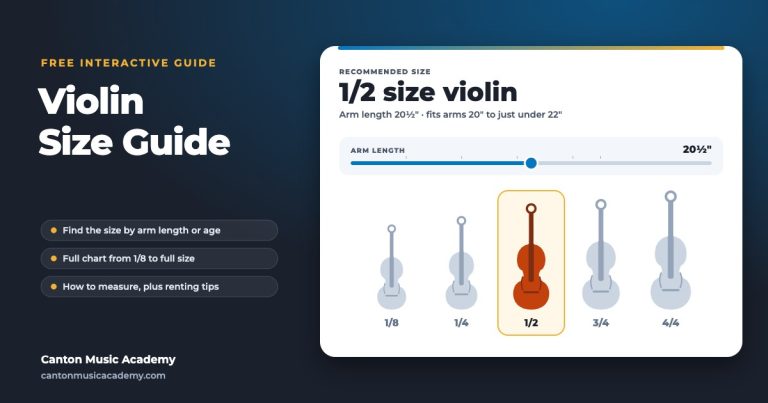 Violin Size FinderFind the right violin size by arm length or age.
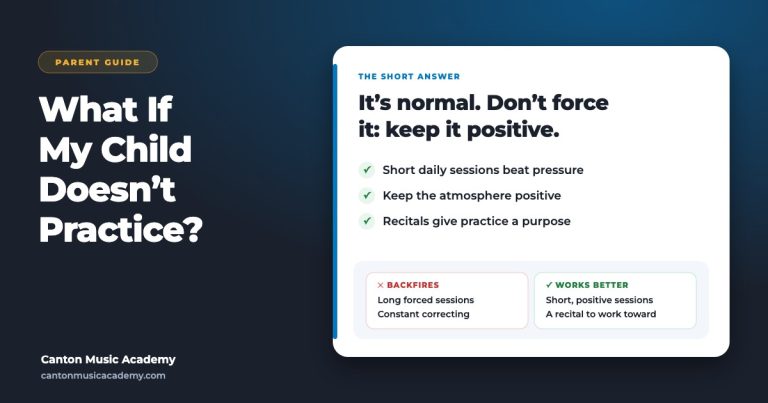 When Kids Won’t PracticeWhat works better than forcing it, from our Parent Guide.
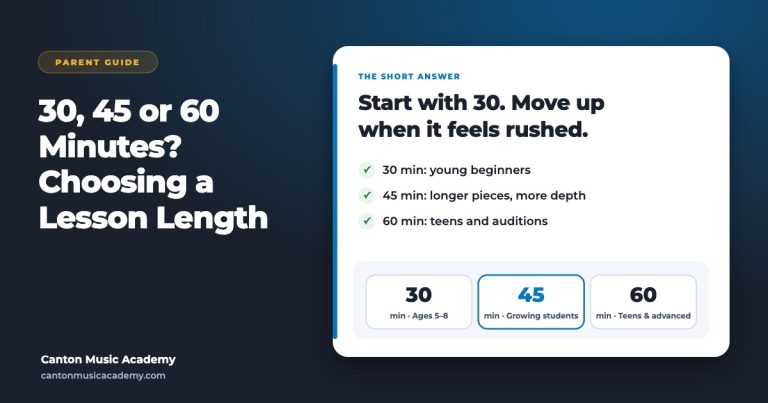 Lesson Length Chooser30, 45 or 60 minutes? Three quick questions.
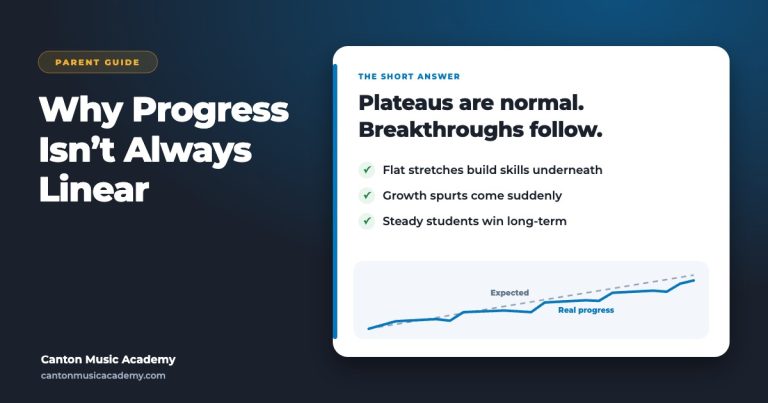 The Progress GraphWhy plateaus are normal, and what comes after them.
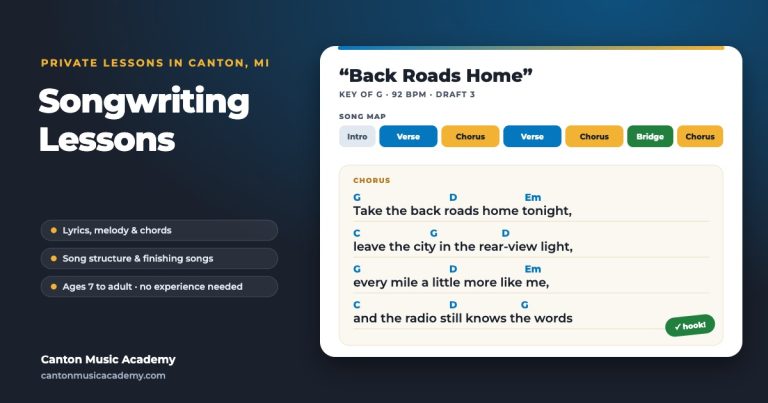 Songwriting LessonsTurn your ideas into finished songs.
Apply What You Learn in Lessons
Understanding theory is important, but applying it consistently is what leads to real progress. Our teachers connect theory directly to the music you want to play, in private lessons for every level.
Book a guitar lesson or call/text 734-667-4983Music Theory Tools FAQ
Are these music theory tools free?
Yes. Every tool on this page is free to use, with no sign-up. Several include free printable PDFs.
Do the tools work for piano and ukulele too?
Many do. The chord calculator and chord progression builder show chords on guitar, ukulele and piano, and the scale and theory tools apply to any instrument.
Where should a beginner start?
Start with scale degree functions and the chord calculator, then learn the minor pentatonic scale and the circle of fifths. The learning path on this page lays out a suggested order.
Can I learn music theory in lessons?
Yes. Theory is part of private lessons at Canton Music Academy for guitar, piano, bass and more, always taught in the context of the music you want to play.