How Long Should My Child Stay in Music Lessons?
Canton Music Academy
One of the most honest questions parents ask is:
“How long should we actually stay in music lessons?”
Not weeks. Not months.
But realistically — how long does it take for this to be worth it?
Here’s the straight answer:
If you’re serious about music, give it two years.
Not two months. Not “let’s see how it goes.”
Two years.
That’s where real change happens.
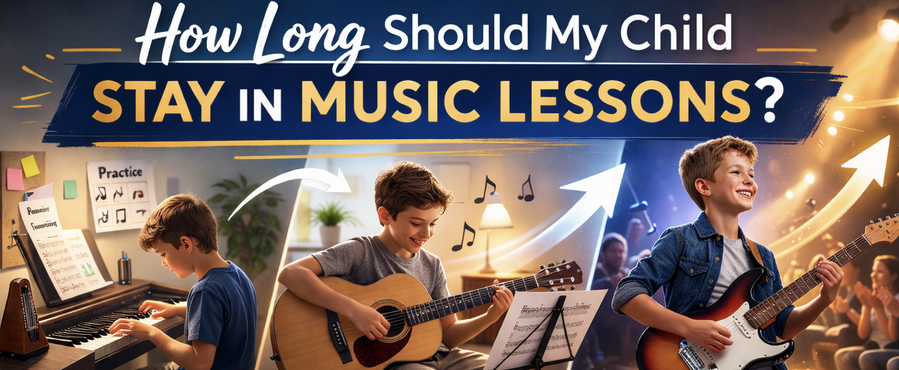
The First 3 Months: Adjustment
The first few months are about:
- Learning how lessons work
- Understanding what practice actually means
- Developing coordination
- Getting used to repetition
This is rarely impressive.
It’s mechanical. It can feel slow.
Sometimes it sounds rough.
But this phase matters.
This is where the brain and hands begin building a connection.
Quitting here makes no sense. It’s like planting a seed and digging it up every week to see if it’s growing.
The First Year: Foundation
Around 6 months, most parents start to feel reassured.
You’ll notice:
- Better rhythm
- Recognizable parts of songs
- Improved posture
- More comfort with the instrument
By one year, students usually have:
- Basic reading skills
- Stronger coordination
- Several pieces they can play confidently
- Real momentum
Now it starts to feel legitimate.
This is also the point where some families think:
“Okay, they’ve learned enough.”
They haven’t.
They’ve just started.
Two Years: The Shift
At two years, something changes.
Students:
- Understand practice
- Accept repetition
- Play with real control
- Have actual musical confidence
This is when music becomes part of their identity instead of just an activity.
That’s why we say — if you’re serious — give it two years.
It doesn’t have to be harsh.
But it does need to be realistic.
You don’t become good at anything meaningful in a few months.
Should We Take Summers Off?
Here’s the straight talk:
Taking summers completely off is usually a terrible idea.
Momentum disappears.
Routine disappears.
Progress stalls.
If the schedule needs to lighten, fine.
But staying connected weekly — even through summer — keeps growth steady.
Music is a habit. When the habit breaks, it takes effort to rebuild.
When Is It Okay to Quit?
Let’s be honest.
Kids will say they want to quit.
Sometimes that’s normal frustration.
Sometimes it’s boredom.
Sometimes it’s because something feels hard.
Quitting should really only be considered in cases of serious defiance or consistent emotional resistance that doesn’t improve over time.
It takes a while to be good at things.
Most adults who quit early say the same thing later:
“I wish I would’ve stayed in lessons.”
We hear that constantly.
And it’s rarely said by people who stuck with it.
What About Switching Instruments?
Switching can work.
Sometimes a student realizes:
- They prefer composition
- They connect better with a different instrument
- They want a new challenge
That can be healthy.
But constant switching is usually not curiosity — it’s lack of discipline.
There’s a difference between thoughtful redirection and chasing novelty.
Music rewards depth, not constant change.
What If Progress Feels Slow?
It’s supposed to.
Early progress builds the foundation.
Later progress builds confidence.
If lessons are consistent and practice happens even in small amounts, growth is inevitable.
Consistency matters more than early talent.
The Long-Term View
Music lessons are not a short-term activity.
They’re not like trying out a sport for one season.
They build:
- Discipline
- Focus
- Confidence
- Creative ability
- Emotional resilience
Whether your child becomes advanced or simply enjoys playing for life, the investment compounds over time.
Two years is not extreme.
It’s reasonable.
And if you want real results — it’s the right mindset.
If you’re ready to commit to steady growth and real progress, we’re here to guide the process.
Continue learning about music progress, teacher quality, and long-term lesson success.
Related Reading
Popular Private Lesson Programs in Canton
- Piano Lessons in Canton
- Guitar Lessons in Canton
- Voice Lessons in Canton
- Drum Lessons in Canton
- Violin Lessons in Canton
Our Sister Music Academies