Are Private Music Lessons Worth It for Kids?
Many parents ask an honest and reasonable question before committing long-term: are private music lessons worth it for kids? With so many options available today, from apps and videos to school programs and group classes, it’s fair to wonder what makes private lessons different and whether they’re truly worth the investment.
For most kids, yes. Private lessons aren’t about prestige or pressure. They’re about creating the right learning environment for each individual child.
- Lessons move at your child’s pace
- Bad habits get caught early
- Confidence grows faster one-on-one
Every Child Learns at a Different Pace
One of the biggest advantages of private music lessons is individual pacing. In a one-on-one setting, the teacher can:
- Move faster when a student is ready
- Slow down when something isn’t clicking
- Adjust the approach without holding others back
This is especially important for kids, who rarely develop skills at the same rate, even when they’re the same age.
Fewer Bad Habits Early On
Without guidance, beginners often develop habits that feel natural at first but become limiting later. Private lessons help:
- Catch posture and technique issues early
- Prevent inefficient practice habits
- Reduce the frustration that comes from “doing it wrong”
Fixing habits later is much harder than learning things correctly from the start.
Confidence Builds Faster One-on-One
For many kids, learning in front of others can be intimidating. Private lessons offer a low-pressure environment, space to make mistakes safely, and encouragement tailored to the student. Some children struggle in group settings but thrive with individual attention. Confidence often grows faster when kids feel seen and understood.
Less Frustration at Home
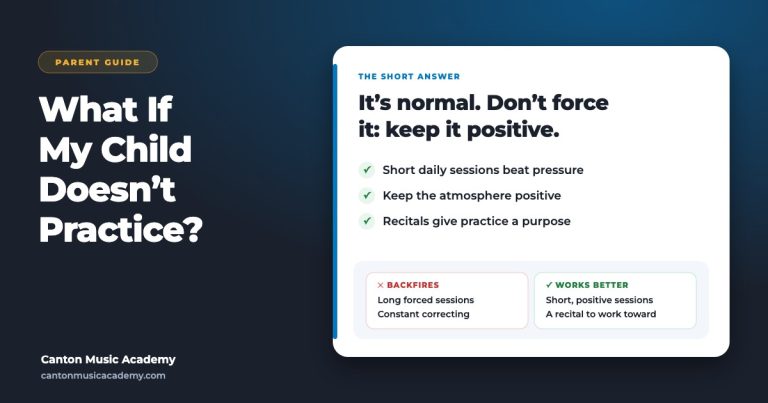
One of the most overlooked benefits of private lessons is what happens between lessons. When students clearly understand what to practice, how to practice it and why they’re practicing it, there tends to be less conflict at home. Parents aren’t left guessing how to help, and kids feel more capable working independently.
Wondering how much practice is realistic? Build a routine by age in How Often Should Kids Practice?
What About Group Classes or Apps?
Group classes and online tools can be great supplements, but they don’t work equally well for every child.
| Private lessons | Group classes | Apps & videos | |
|---|---|---|---|
| Pace | Set by your child | Fixed for the group | Self-paced |
| Feedback | Real-time, personal | Shared with others | None in real time |
| Adapts to your child | Yes | Somewhat | No |
| Time for questions | Every lesson | Limited | None |
| Best for | Steady, lasting progress | Social fun, ensemble skills | Convenience, extra practice |
For some kids, group classes or apps are enough. For others, they lead to frustration or stalled progress. Group classes, like our rock band classes, also make a great add-on to private lessons.
Benefits That Go Beyond Music
Private instruction also builds valuable life skills like discipline, focus and perseverance, qualities that carry into school and everything else. And because lessons are scheduled around your family, they’re easier to stick with through busy school years.
Private Lessons Aren’t One-Size-Fits-All
Private lessons don’t mean high pressure or rigid expectations. They can be fun and exploratory, slow-paced and relaxed, or focused on enjoyment rather than performance. The value comes from flexibility, not intensity.
So, Are Private Music Lessons Worth It?
For many families, the answer is yes, because private lessons offer personalized instruction, clear guidance, faster confidence building and fewer frustrations early on. That said, the right choice depends on the child, the family’s goals and expectations. There’s no single solution that works for everyone.
If you’re unsure, a first lesson is a great way to explore whether private instruction feels like a good fit. Enrollment is flexible, and decisions don’t have to be permanent.
Private Lesson FAQ
What age can kids start private music lessons?
Many children start around age 5, depending on the instrument and their attention span. Piano, violin and voice are common first instruments for young kids.
Are private lessons only for serious students?
Not at all. Lessons can be relaxed and fun. Many students take lessons simply because they enjoy music, and the teacher adjusts to those goals.
How long until we see progress?
Usually sooner than you’d think, though early progress is often mental before it’s physical. See How Do You Know If Music Lessons Are Working?
Once or twice a week?
Once a week works well for most students. Twice a week can help brand-new beginners build habits faster. Read Is Twice-a-Week Better Than Once a Week?
The Parent Guide to Music Lessons
Straight answers to the questions parents ask us most.
Getting started
Practice & progress
Questions About Your Child’s Lessons?
Every student is different. Call, text or stop by and we’ll help you find what works for your child and your schedule.
Also from our family of schools: Grosse Pointe Music Academy and Brighton Music Academy.