Can My Child Learn More Than One Instrument?
Canton Music Academy
It’s a question we hear fairly often:
“Can my child learn more than one instrument at the same time?”
In many cases, the answer is yes.
In fact, learning a second instrument can keep music fresh, open new creative outlets, and help students understand music in ways they might never experience by playing only one instrument.
The important question isn’t whether they can. It’s whether adding another instrument fits their goals, schedule, and interests.
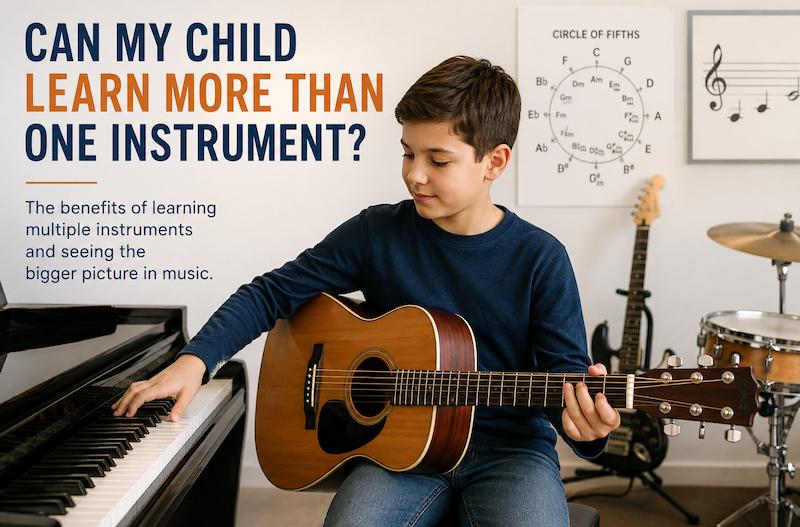
It Depends on the Student’s Goals
Not every student studies music for the same reason.
If the goal is to become highly proficient on one instrument, it often makes sense to stay focused for a while. Building strong technique takes time and consistent practice.
But if the goal is to develop a broader understanding of music, explore creativity, or simply enjoy learning, adding another instrument can be a wonderful experience—even fairly early on.
There isn’t one correct path.
Learning Another Instrument Helps Students See the Bigger Picture
One of the biggest benefits of learning multiple instruments is that students begin to understand how music fits together.
Instead of seeing only their own part, they begin to understand the role of everyone else.
A guitarist starts to understand why the bass player chooses certain notes.
A pianist begins hearing how chord progressions support a singer.
A drummer gains a better understanding of harmony and phrasing.
Students become more aware of how every instrument contributes to the music as a whole.
That perspective becomes especially valuable for students who eventually play in bands, accompany other musicians, write songs, or explore music production.
Music Is One Language
Many people assume learning another instrument means starting completely over.
That isn’t usually true.
Music is one language.
The notes stay the same.
The chords stay the same.
The rhythms stay the same.
Only the way you play them changes.
I’ve had adult students who learned guitar years ago and later started piano. One of the biggest moments for them was realizing that all the chord names they already knew still applied.
The music didn’t change.
Only the instrument did.
That realization helps students connect ideas much more quickly.
Some Instrument Combinations Work Especially Well
Certain combinations naturally complement each other.
For example:
- Piano and voice help students accompany themselves while developing strong listening skills.
- Piano and guitar are excellent because both are chord-based instruments that strengthen harmony and songwriting.
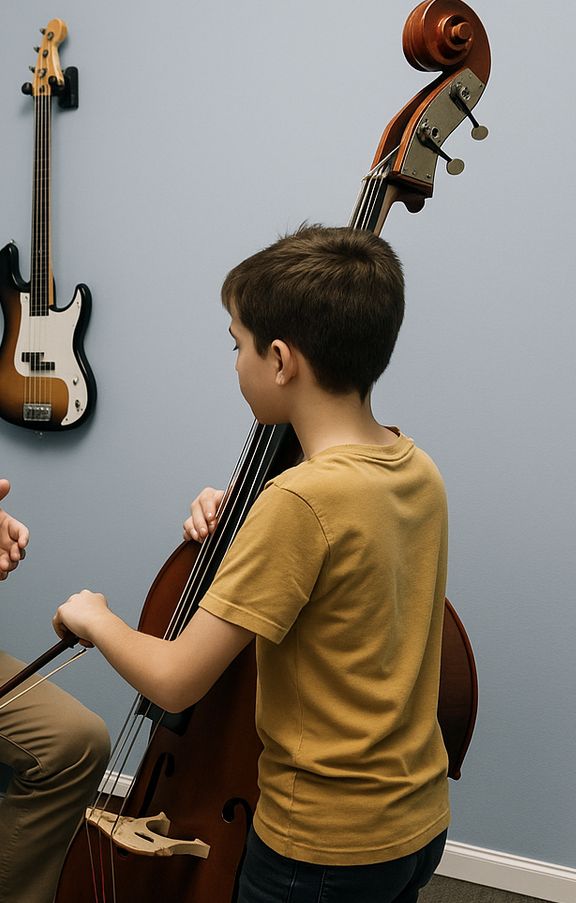
- Guitar and bass share many technical and theoretical concepts while teaching different musical roles.
- Piano and drums combine rhythm with harmony, creating a well-rounded musical foundation.
These combinations help students understand music from different perspectives rather than simply learning more notes.
Time Is Usually the Biggest Challenge
For most families, the biggest obstacle isn’t ability.
It’s time.
Learning two instruments means finding time for lessons and practice.
There is also the practical side of owning or renting another instrument and having space for it at home.
Those considerations are real, but they don’t automatically make learning two instruments unrealistic.
Many students successfully balance multiple instruments by keeping expectations reasonable.
Interest Should Usually Come From the Student
Parents sometimes wonder if they should encourage a second instrument.
Generally, students become interested on their own.
They’ll hear another instrument at school.
They’ll watch a performance.
They’ll become curious.
That’s often the best time to explore something new.
Occasionally, adding another instrument can also help when a student feels stuck or needs a fresh musical challenge.
The key is making sure the decision comes from genuine curiosity—not simply because something feels difficult.
If I Could Recommend One Second Instrument…
If a student asked me which second instrument offers the most versatility, I’d probably recommend piano or guitar.
Both are chord instruments.
Both help students understand harmony.
Both make songwriting easier.
Piano has one advantage for many beginners because the layout is visual. Students often develop an understanding of chords, scales, and music theory more quickly.
Guitar has a different advantage.
It’s portable.
You can take it almost anywhere, making it easier for many students to play outside the lesson room.
Neither is objectively better.
Both help students become more complete musicians.
The Bigger Goal
Very few musicians truly master every instrument they play.
That isn’t the goal.
The goal is to become a more complete musician.
Learning another instrument builds flexibility.
It develops listening.
It encourages creativity.
And perhaps most importantly, it helps students understand that music is much bigger than any one instrument.
Whether your child eventually plays one instrument or several, the skills they build will support them for years to come.
Research continues to show that studying music benefits students in many ways beyond learning an instrument. Organizations like the National Association for Music Education (NAfME) provide articles and research about music education, creativity, and lifelong learning.